In the NY Times….
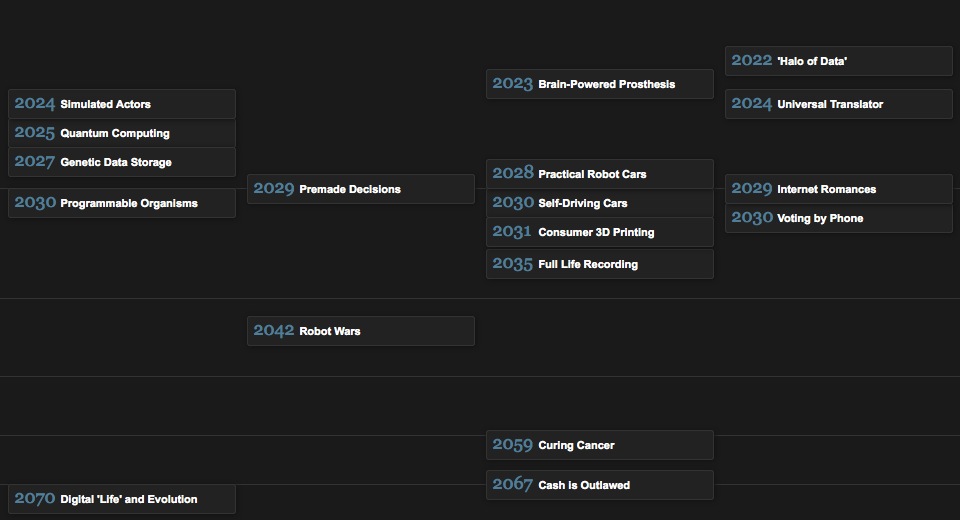
The data was all for summer host cities. If someone finds investment information about any of the games not listed above I’d like to see it please. The International Journal of the History of Sport “A Brief Historical Review of Olympic Urbanization” by Hanwen Liao and Adrian Pitts – Excerpt – – Planning […]
The future of 3D printers.
Event coverage is naturally subject to bias. Here, “The Event” is seen not as a single node from which coverage is emanating from, but a cyclical event from which future events, perception, and coverage change due not only to each other, but cycles of events in the past as well. Thus, in order to understand […]
Synthetic Biology explained
Most newsworthy events fall into two general catagories; News and Media Events. News events are those events which can be represented as a set of information (the score was 5 to 4 in the Soccer game last night). These events can be represented as points in time. A media event is the coverage and […]
What can a stadium be used for once it no longer is a venue to watch sports or other forms of entertainment? Can it serve as a community center for the future providing a central gathering space to buy, sell, and socialize? Can ti serve as a community garden?
http://www.urbandesignweek.org/ Check the Competition “For the City/By the City” and other event along this week and next, including weekend.
The link is to a site that has many images of the infrastructure built for the 1936 Berlin Olympics. The images show the conditions of the structures as they existed for the games and as they exist now. The stadium has gone through a few phases of redevelopment, but most of the buildings only […]
Sequel to the award winning GOLDEN AGE – THE SIMULATION, ‘SOMEWHERE’ attempts to visualise the notion of a ‘downloaded architecture’. We are in a time where much of what we do is online. The notion of the online will radically change, the notion of the computer and the home will merge. We will download […]
http://www.good.is/post/carbon-nanotubes-will-make-buildings-that-move/
All content © Copyright 2026 by CLOUD Disassembly RPI.
Subscribe to RSS Feed – Posts or just
Comments
Powered by WordPress
Designed by Graph Paper Press